
- Real Estate Spacial Data: The Evolution of Property Intelligence
- Why Floor Plans Matter More Than Ever
- The Rise of Automated Property Capture
- Why API-First Workflows Are Becoming Essential
- AI Virtual Staging and Personalized Experiences
- The Business Impact of Automation
- The Future of Real Estate SEO Is Spatial
The real estate industry is changing fast. In 2026, high-quality photos alone are no longer enough to make a listing stand out. Search engines, AI platforms, and real estate marketplaces are increasingly prioritizing structured property data that machines can easily understand, analyze, and recommend.
For agents and photographers this shift creates a major opportunity: becoming a provider of spatial data, not just visual content.
To maintain authority in a high-volume market, professionals must bridge the “Efficiency Gap”.
Real Estate Spacial Data: The Evolution of Property Intelligence
The traditional workflow of 2024 is now a bottleneck. In 2026, the industry has shifted toward Solution-Driven Automation. Agents and buyers no longer wait for 48-hour turnarounds; they interact with “Digital Twins” that are live within minutes of a site visit.

Why Floor Plans Matter More Than Ever
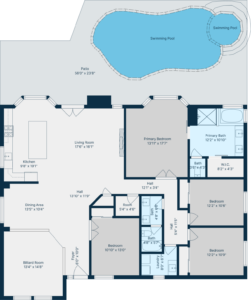
According to the National Association of Realtors, floor plans remain one of the most requested listing features after photos. Buyers want more transparency before booking a showing, and platforms are adapting to meet that expectation.
Today’s search algorithms reward listings that include accurate, standardized property information. That means ANSI-compliant floor plans, precise room dimensions, and machine-readable spatial data are becoming essential for visibility online.
With mobile hardware-accelerated scanning solutions like CubiCasa, real estate professionals can quickly generate digital floor plans that provide reliable structural data without expensive equipment or manual measurements.
This creates what many in AI and search now call the “semantic backbone” of a listing: structured information that helps large language models and AI-powered search engines understand a property in detail.
Instead of searching only by keywords, future buyers will increasingly ask AI tools questions like:
- “Find me a home with a south-facing kitchen.”
- “Show properties with an open-concept living area.”
- “Find houses with a 15×20 primary bedroom.”
Without structured spatial data, those listings may never appear in AI-generated search results.
The Rise of Automated Property Capture
As listing volumes increase, manual workflows are becoming harder to scale. Real estate media teams are now moving toward automated capture systems that improve consistency and reduce production time.
One major example is autonomous aerial capture.
Instead of manually flying drones for every listing, professionals are adopting automated flight-path software that creates repeatable “hero circuits” around a property. These standardized routes produce cleaner, more consistent footage across every listing.
The benefit goes beyond efficiency.
Consistent flight telemetry allows AI-powered editing systems to automatically generate overlays, lot boundaries, transitions, and cinematic sequences with minimal human input. Raw footage becomes a structured media asset that fits directly into modern computational photography pipelines.
The result is faster delivery, more consistent branding, and a workflow that scales far beyond traditional manual production.

Why API-First Workflows Are Becoming Essential
One of the biggest problems in real estate media has always been the delay between capturing content and publishing the listing.
Manual file uploads, folder organization, email transfers, and disconnected tools create what many professionals call the “media void”, the period where content exists but is not yet generating value.
Modern workflows solve this through API-first systems.
Using automation tools and webhooks, media can flow directly from capture devices into editing systems and publishing platforms without repetitive manual handling.
For real estate teams, this means:
- Faster listing activation
- Reduced operational friction
- More consistent data management
- Better scalability for growing businesses
Most importantly, it removes the bottlenecks that prevent media operations from scaling efficiently.
AI Virtual Staging and Personalized Experiences
Static listing photos are rapidly evolving into dynamic, personalized experiences.
AI-powered virtual staging now allows buyers to instantly visualize the same room in multiple design styles, minimalist, industrial, boho, Scandinavian, or modern luxury, within the same 3D environment.
This is not just a visual upgrade. It is a conversion tool.
Interactive style personalization helps capture valuable preference data that AI systems can use to better understand buyer intent and recommend more relevant properties.
As AI search continues to evolve, listings that offer interactive experiences and richer contextual data will likely outperform static listings in both engagement and discoverability.

The Business Impact of Automation
The operational advantages of automation are substantial.
If a media professional saves just 2.5 hours per listing through automated capture, editing, and delivery workflows, they can potentially double daily production capacity from two listings per day to four.
At an average production value of $200 per listing, that increase can represent more than $100,000 in additional annual revenue without hiring additional staff.
The biggest shift is mindset.
Successful real estate media professionals are no longer operating purely as photographers or videographers. They are becoming systems operators and spatial data providers.
The Future of Real Estate SEO Is Spatial
As AI-driven search becomes more dominant, property discoverability will depend less on traditional keywords and more on structured, machine-readable information.
The listings that perform best in the future will not simply look better, they will communicate more effectively with AI systems.
That means every property should include:
- ANSI-compliant floor plans
- Accurate room dimensions
- Structured spatial metadata
- Aerial mapping data
- Interactive digital experiences
- API-connected media distribution
In other words, every listing should function as a digital twin.
For real estate professionals looking to future-proof their marketing strategy, investing in spatial data is no longer optional. It is becoming the foundation of modern property visibility.