Why a Business Plan Matters
To start a real estate photography business, decide which services you’ll offer, research what photographers in your area charge, build a portfolio, market your work to real estate agents, and plan your startup costs and income goals. The sections below walk through each step.
A clear business plan helps you stay focused and profitable from the day you launch. Without one, it’s easy to underprice your services or chase the wrong audience.
A business plan shows you where your money, time, and energy should go. It makes you decide which clients you want to work with, how to position your services, and how to stay profitable in the long term.
A written plan also makes it easier to:
- Set realistic income goals and track your progress
- Find profitable niches, such as drone photography or floor plans
- Create a consistent marketing message that attracts your ideal clients
- Avoid burnout by knowing which projects fit your vision and which don’t
In short, your business plan doesn’t have to be fancy, but it should be focused and intentional.
How to write a real estate photography business plan
Now that you know why a business plan matters, let’s break down how to actually write one.
The good news? It doesn’t have to be long or complicated, what matters is clarity and focus. This real estate photography business plan template shows you exactly how to define your services and attract clients.
Here’s a simple structure you can follow:
1.Executive summary
This is a short overview of your business. Describe who you are, what you do, and what makes your photography unique. Example: “At Skyline Shots, we provide professional real estate photography and virtual tours for agents in Austin, helping them showcase properties that sell faster and look better online.” Keep it to one paragraph. It’s basically your business “elevator pitch.”
2. Market analysis
Research your local real estate market.
Ask yourself: How many listings are there each month? What types of properties are popular (apartments, luxury homes, rentals)?
Who are your competitors and what do they charge?
Understanding this helps you identify where you can stand out, for example, by offering faster delivery times, brighter editing styles, or floor plan add-ons that others don’t provide.
3. Services and pricing
Decide exactly what you’ll offer and how much you’ll charge. Typical real estate photography packages include:
-Basic photo package (15–25 images)
-Premium photo package with drone shots
–3D or virtual tours
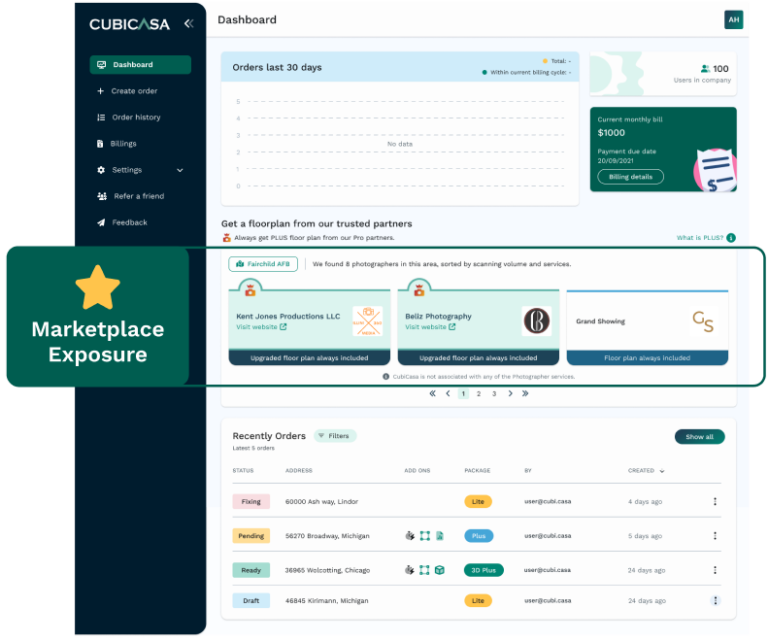
–Real Estate Floor plans
When setting prices, research what photographers in your area charge, and make sure to include your editing time, travel, and software costs. You can start lower to build your portfolio, then increase prices as you gain clients and reviews.
4. Marketing plan
This is where you outline how you’ll get clients. Build a website or portfolio on a platform such as Squarespace or Pixieset. Post regularly on Instagram, TikTok, and LinkedIn, and share behind-the-scenes videos or before-and-after photos.
Join local real estate Facebook groups or attend open houses to meet real estate agents. Keep a simple list of the agents you’ve worked with, and follow up when they post new listings. For more ideas, see our guide on how to get real estate photography clients.
5. Financial plan
List your startup costs (camera, lenses, drone, tripod, editing software) and monthly expenses (insurance, subscriptions, marketing).
Then estimate how many shoots you need per month to hit your target income.
Knowing your numbers early keeps your business sustainable and helps you make smarter decisions.
Price your editing time, too. Compare the cost of editing yourself, outsourcing, and per-photo AI editing such as CubiCasa AI real estate photo editing, which starts at USD $0.15 per photo for Preferred Photographer PRO members.
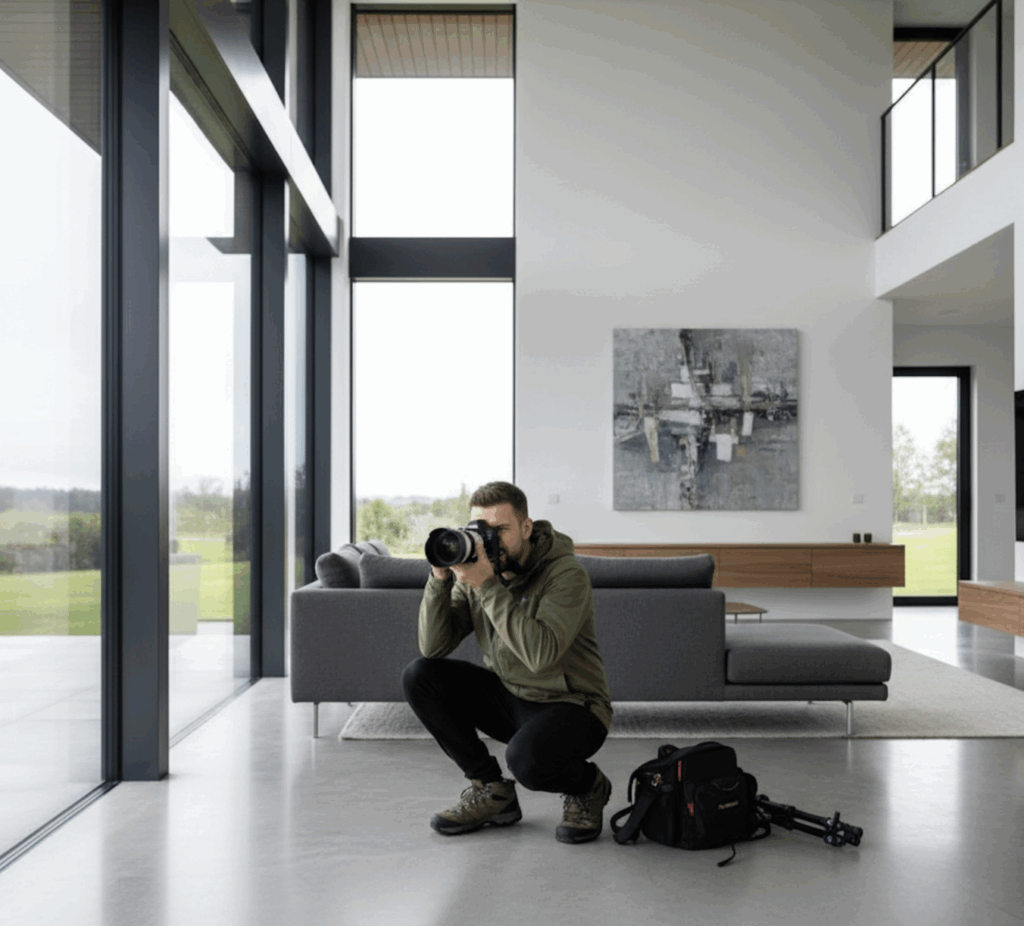
How much do real estate photographers make
The income of real estate photographers in the United States varies depending on experience, location, and services offered.
According to ZipRecruiter (2025), the average real estate photographer earns around $62,000 per year, while Salary.com reports an average closer to $70,000 annually. Glassdoor data suggests similar numbers, with most photographers making between $60,000 and $75,000 per year.
Freelancers and small business owners often earn more when they expand beyond photography. Adding drone shots, video tours, or floor plans can increase revenue by 30–50 percent. Experienced professionals who offer complete marketing packages can make $100,000 or more annually.
In short, most real estate photographers earn between $60,000 and $80,000 per year, with top performers reaching six figures by diversifying their services and building long-term relationships with real estate agents.
Easy-to-copy strategies for growing your real estate photography business
Once your business plan is in place, the next step is to grow your client base and increase your income. You don’t need a big marketing budget just consistency, quality, and smart positioning. Here are four strategies you can start using today.
Build relationships with real estate agents
Most successful photographers rely on repeat clients. Focus on developing long-term partnerships with local real estate agents and property managers. Deliver high-quality photos quickly, communicate clearly, and offer flexible scheduling. A good relationship often brings steady referrals without extra advertising costs.
Offer more than just photos
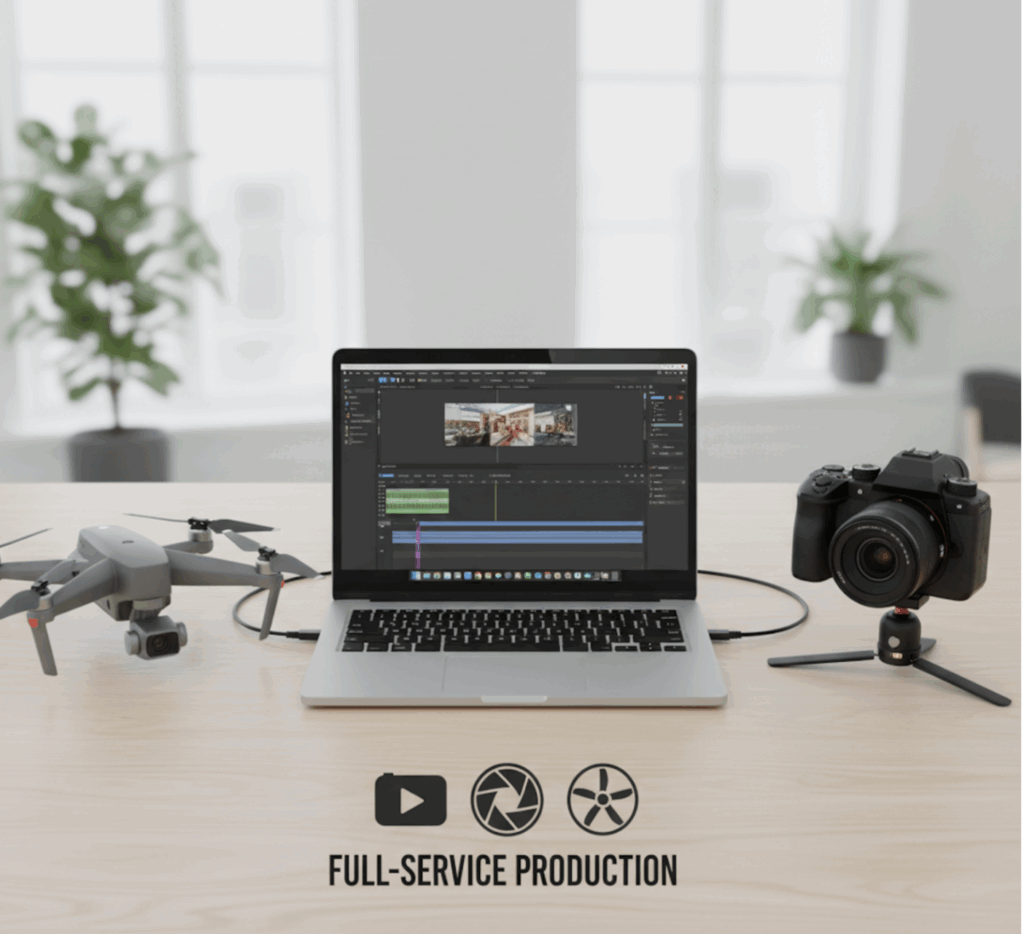
To stand out in a competitive market, expand your services beyond basic photography. Real estate agents increasingly expect full marketing packages that include drone shots, video tours, and floor plans. These extras not only add value for clients but also allow you to charge higher rates and position yourself as a full-service professional.
Strengthen your online presence
Your portfolio is your strongest marketing tool. Keep your website up to date, post new work on social media, and share before-and-after examples that show your editing style. Platforms like Instagram, TikTok, and LinkedIn are great for showcasing your personality and attracting agents who value creativity and reliability.
If you’re looking for a real example to help you structure your own plan, this photography business plan template is a great starting point. It’s not created specifically for real estate photography, but the outline, strategy sections, and financial structure are highly relevant and easy to adapt. You can use it for inspiration and customize it to fit your real estate niche, pricing, services, and marketing approach.
Growing a real estate photography business takes time, but by building trust, diversifying your services, and staying visible online, you can turn your creative skills into a stable, high-earning business. A clear real estate photography business plan keeps you on track as you grow and helps turn your passion into a thriving business.
Spend less time editing
Editing a full listing by hand can take hours, and those hours limit how many shoots you can book. AI photo editing handles the repetitive first pass, so you review photos instead of editing each one.
With CubiCasa AI Photo Editing, you upload your listing photos and get edited files back in about 10-30 minutes. HDR Merge and Window Pull are included with every order. You can add Sky Replacement, Window Sky Replacement, Fireplace Enhancement, or Camera and Person Removal when a listing needs them.
CubiCasa also delivers floor plans and virtual tours, so you can offer a full listing package from one platform. New photographers get 300 free edits, and Preferred Photographer PRO members pay as little as USD $0.15 per photo.